
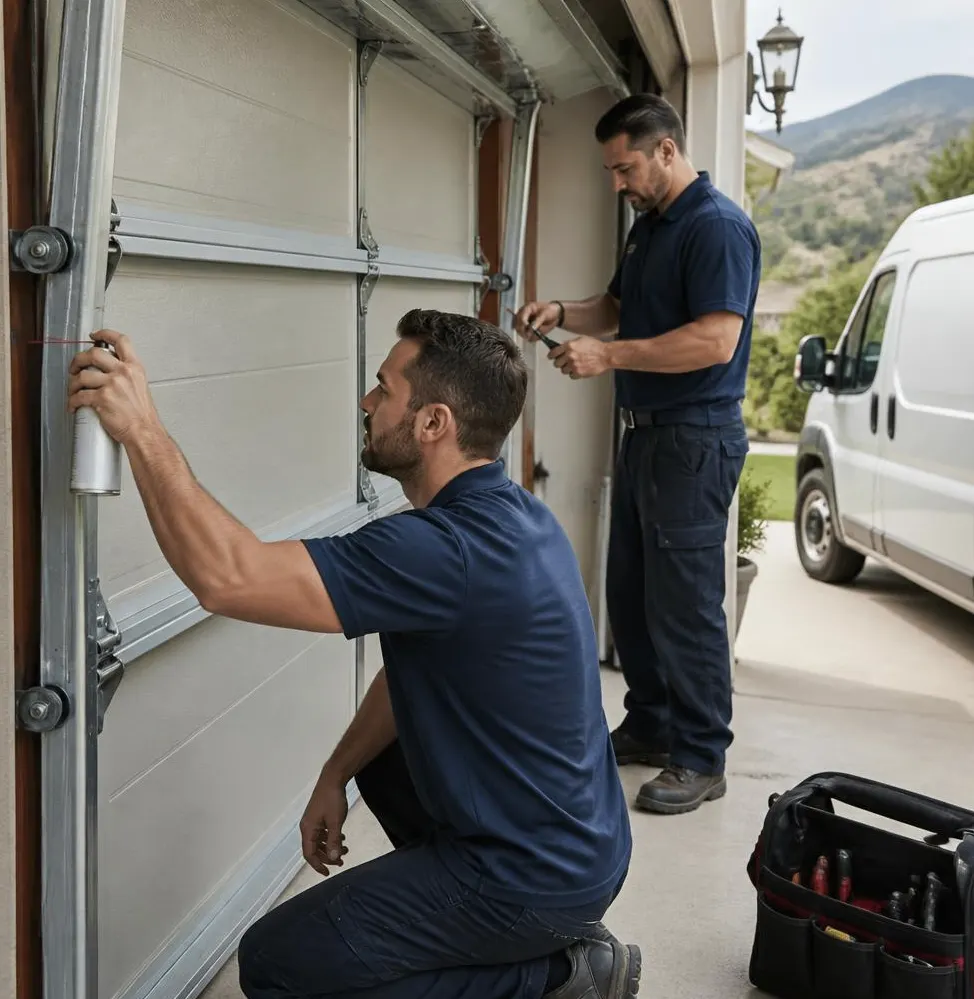
The first move almost everyone makes when a garage door opener starts screeching is to grab a can of WD-40 and spray every moving part they can reach. It's tempting because it's cheap, it's already sitting on the shelf, and the noise seems to quiet down for a day or two. The problem is WD-40 is a solvent, not a long-term lubricant — it dissolves old grease and dust into a thin film that dries out fast. Along the coast here, where salt air and humidity already work against bare metal, that dried residue leaves hinges and rollers more exposed to rust, not less. Within a week or two the grinding comes back, usually louder.
If you want the noise gone for good, work through the problem in order, from the cheapest fix to the one that actually needs a technician.
Tools You'll Need
- Socket wrench or adjustable wrench set
- White lithium grease or a silicone-based garage door lubricant (not WD-40, not motor oil)
- Clean rags
- Flashlight
- Replacement nylon rollers (optional, for an upgrade)
- Stepladder
Step-by-Step: From Cheap Fixes to Bigger Repairs
Step 1: Find out where the noise is actually coming from
Run the door up and down once with everything quiet and listen closely. A rattle usually means loose hardware. A sharp metal-on-metal grinding near the rollers points to worn or rusted rollers. A deep clunk from the opener unit itself often means loose motor mounting or worn gears inside the housing. A door that groans as it moves, especially after a stretch of heavy rain, can mean a wood panel has swollen and is rubbing the frame — common here during hurricane season when humidity stays high for days at a time.
Step 2: Tighten everything you can reach
Garage doors open and close thousands of times a year, and every bolt, hinge, and bracket works slightly loose over time. Go panel by panel with a socket wrench and snug up the bolts on hinges, roller brackets, and track mounting brackets. Don't overtighten into stripped wood or drywall — a comfortably snug turn is enough. This step alone resolves a surprising number of rattles.
Step 3: Lubricate the right parts with the right product
Wipe away old grease and grit with a rag first, then apply white lithium grease or a silicone garage door lubricant to the hinges, roller stems (not the wheel surface if they're nylon), and the opener's chain or screw drive. Give the springs a light coat too — coastal humidity is tough on them, and a protective film helps. Skip the track itself; lubricating it just collects dust and grime instead of quieting anything.
Step 4: Replace worn rollers
If your rollers are steel and original to the door, swapping them for nylon rollers is one of the most effective noise fixes a homeowner can tackle. Nylon rollers run quieter and don't rely on metal-on-metal contact inside the track. Loosen the roller bracket, slide the old roller out, and slide the new one in, working one roller at a time so the door stays supported. Leave the two rollers closest to the bottom cable drums alone unless you're confident — those sit under more tension.
Step 5: Check the opener's mounting and isolation
A noisy opener unit is often just transmitting vibration through the ceiling joists into the house above. Check that the mounting bracket is tight, and if your opener doesn't already have rubber isolator pads between the motor and the bracket, adding them can cut down a lot of the hum and rattle.
Step 6: Consider a belt-drive conversion
If you've done everything above and the opener is still loud, the drive mechanism itself may be the issue. Chain-drive openers are reliable but inherently noisier because metal links run over a sprocket. A belt-drive opener uses a reinforced rubber belt instead, removing most of that mechanical clatter. This isn't a weekend swap — it means replacing the opener unit, running new wiring, and setting travel limits and force correctly, which matters even more here where wind-load-rated doors need the opener's force settings matched to the door's weight and resistance.
Where DIY Ends and a Technician Should Take Over
Tightening hardware, lubricating moving parts, and swapping rollers are all reasonable weekend projects. Anything involving torsion springs, lift cables, or a full opener swap is where it's worth stopping. Springs are under heavy tension and can cause serious injury if they release while you're working nearby. Cables that look frayed or rusted from salt air exposure need replacement, not a patch job. And a belt-drive conversion done with mismatched force settings can strain the door or burn out the new opener within months.
When to Call Rosemary Beach Garage Door Repair
If you've tightened, lubricated, and swapped rollers and the door is still noisy, or the sound is clearly coming from the springs or cables, it's time to call in a technician. We handle Garage Door Opener Installation for homeowners ready to move to a quieter belt-drive system, matched to the door's weight and wind-load rating. We also run Preventive Maintenance & Tune-Ups that catch early rust on springs and cables before coastal humidity turns a quiet annoyance into a bigger repair.
If your garage door is grinding, clunking, or groaning anywhere from Rosemary Beach to Inlet Beach, Seacrest, or Santa Rosa Beach, give us a call — we'll track down the source of the noise and fix it right the first time.